
Design · 7 min read ·
Hurricane Season on Hilton Head: How to Protect Your Outdoor Furniture (and Which Pieces Can Stay Put)
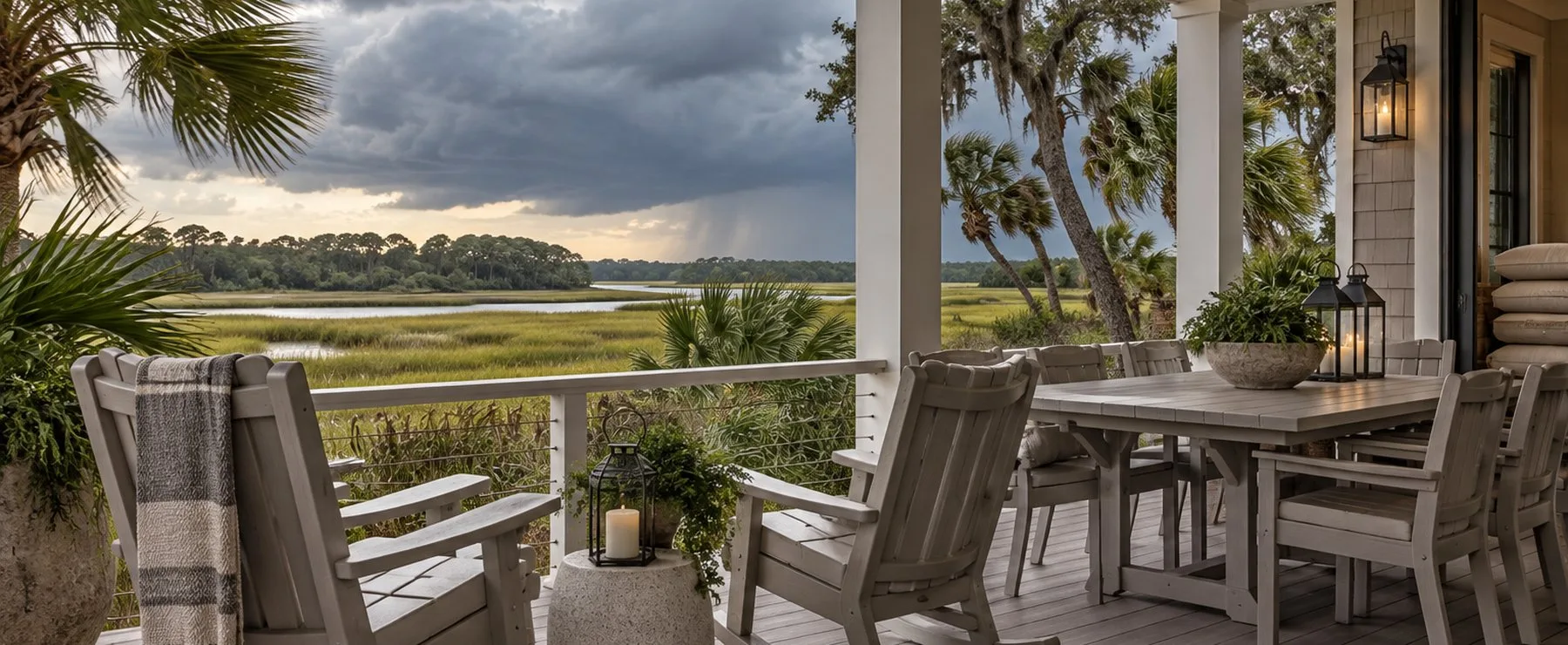
Mid-September is the peak of Atlantic hurricane season. Here is a practical storm plan for porches, pool decks and outdoor kitchens on Hilton Head and in Bluffton, plus how to choose furniture that makes the next storm easier.
01
Why Early September Matters
Atlantic hurricane season runs from June 1 through November 30, but it has a peak, and it falls right about now. Historically, the second week of September is when the tropics are most active. Anyone who has lived on Hilton Head or in Bluffton for a few years knows the routine: a storm shows up in the forecast cone, the grocery store runs out of water, and then everyone turns around and looks at the back porch.
Outdoor furniture is one of the few things around the house you can actually do something about before a storm. It is also, if you ignore it, one of the things most likely to do damage. A chaise that goes airborne in a 60-mile-per-hour gust becomes a battering ram for sliding doors, screens and your neighbor's car.
This guide covers two things: what to do when a storm is coming, and how to buy furniture that makes the next one less of a scramble.
02
The 48-Hour Porch Plan
When a named storm is forecast to come near the coast, work through the list in this order. Most of it takes an hour or two with two people.
- 1Bring every cushion, pillow and throw inside. Cushions are sails. They are also the most expensive thing to replace after a soaking, and wet foam that sits for days in late-summer heat grows mildew fast.
- 2Close, remove and store umbrellas. Take the canopy off the pole if you can, and bring the base in or lay it flat. An open umbrella is the single most dangerous object on most patios.
- 3Move lightweight pieces indoors or into the garage. Side tables, poolside loungers, folding chairs, planters, and anything made of resin or thin aluminum.
- 4Group heavy pieces against a wall and out of the wind. Tables and dining chairs can often stay on a covered porch if you push them tight against the house, turn chairs upside down on tabletops, and tie the group together.
- 5Shut off the gas. Close the valve on your grill, fire table and patio heater, disconnect portable propane tanks, and store them upright outdoors in a sheltered spot, never inside the house or garage.
- 6Secure the grill. A freestanding grill on casters should be locked, lid latched and moved against a wall. A built-in island is anchored by weight and generally stays put; clear anything loose off the countertop.
- 7Take photos. A quick video of your porch before the storm, with furniture in place, makes an insurance conversation much easier afterward.
If you evacuate, do the porch first. It is the part of storm prep that cannot be done from the road, and it is the part most likely to cause damage if it is skipped.
03
What Can Usually Stay Out
Not every piece needs to come inside, and knowing which ones can stay saves real time when the clock is running. As a rule of thumb, heavy, low-profile pieces with no fabric do fine on a covered porch when they are grouped and secured.
- Poly lumber. Recycled high-density poly furniture, like the Amish-built collections from Berlin Gardens, is heavy for its size, sheds water and does not rot. Rocking chairs and dining sets in poly lumber are among the easiest pieces to leave out, grouped against the house.
- Wrought iron. Hand-forged iron from O.W. Lee is heavy enough that it rarely moves. Check it after the storm for chipped finish where pieces knocked together, and touch it up before salt air gets a foothold.
- Built-in outdoor kitchens. An aluminum Challenger island with a stone countertop is not going anywhere. Clear the counter, cover the grill head if you have a fitted cover and strap it down, and close every door and drawer.
What needs to come in: cushions, umbrellas, anything on casters, lightweight aluminum or resin pieces, lanterns, rugs, and small accessories like speakers and planters.
04
After the Storm
Once it is safe to go outside, walk the porch before you start putting things back.
- Rinse everything with fresh water. Storm surge and wind-driven rain carry salt and grit. A gentle hose rinse, never a pressure washer, is the single best thing you can do for any outdoor finish.
- Let cushions dry completely before they go back out. Stand them on edge in the sun. If a cushion got soaked through, unzip the cover and dry the insert separately.
- Check frames and welds. Look for bent legs, cracked welds and loose hardware on anything that tipped or got hit.
- Inspect the gas lines before relighting. Check hoses and connections for damage, reconnect tanks, and do a soapy-water leak check on the fittings before you light the grill or fire table.
05
Buying With Storms in Mind
The best time to think about hurricane season is when you are choosing furniture, not when a storm is on the way. A few questions we ask every customer who lives near the water:
- Where will it live? A deep covered porch and an exposed pool deck are two different climates. Exposed pieces should be heavier and fabric-light.
- How much does it weigh? Weight is not a flaw near the coast. The same heft that makes poly lumber or wrought iron feel substantial is what keeps it on the deck in a summer squall, never mind a tropical storm.
- What is the frame made of? Powder-coated aluminum, poly lumber and wrought iron all hold up to salt air in different ways. Our guide to Lowcountry outdoor furniture materials goes deeper.
- Where will the cushions go? If you do not have a spot to store cushions quickly, choose pieces that are comfortable with fewer of them, or add a storage bench to the plan.
- Is it easy to move? Woven pieces from Lloyd Flanders are hand-woven over aluminum frames, which makes them light enough to carry inside before a storm. That is a real advantage on a screened porch or lanai.
06
Common Questions
Should I cover my furniture during a hurricane? Generally, no. A fitted cover can catch wind and pull a piece over, or blow away entirely. Covers are for everyday dust and pollen, not for storms. Bring the fabric inside instead.
Can I leave my grill on the porch? A built-in grill in an island can stay. A freestanding grill should be locked, lid latched, gas disconnected, and pushed against a wall or moved into a garage. Never store a propane tank indoors.
Is it worth anchoring furniture to the deck? For pieces that stay out year-round on an exposed deck, tie-downs and anchor points can help. The simplest approach for most homes is to group heavy pieces tightly against the house and tie them to each other.
07
Stop In Before the Next Storm
If you are replacing pieces after a storm, or you want furniture that makes storm prep simpler, come see the difference in person. We will show you the heavy pieces that can stay put and the lighter ones that carry inside easily, and help you plan a porch that works in all four seasons, including the fifth one we have here.
Terrace + Tide is at 13 New Orleans Road on Hilton Head Island, Tuesday through Friday 10 to 5, Saturday 10 to 4, and Monday by appointment. Call us at (843) 715-0927.
Products Featured in This Article
Keep Reading
You May Also Like
Ready to Create Your Outdoor Space?
Visit our showroom for personalized guidance on furniture, grills, and everything you need to live beautifully outside.
Schedule a Consultation