
Design · 12 min read
Lowcountry Outdoor Furniture: What Materials Actually Last on the South Carolina Coast
Salt air, intense UV, and 90% humidity destroy outdoor furniture that isn't built for the coast. This material-by-material guide explains exactly what lasts in the Lowcountry — and what doesn't — so you buy once instead of replacing every two years.
01
The Lowcountry Is Beautiful and Brutal
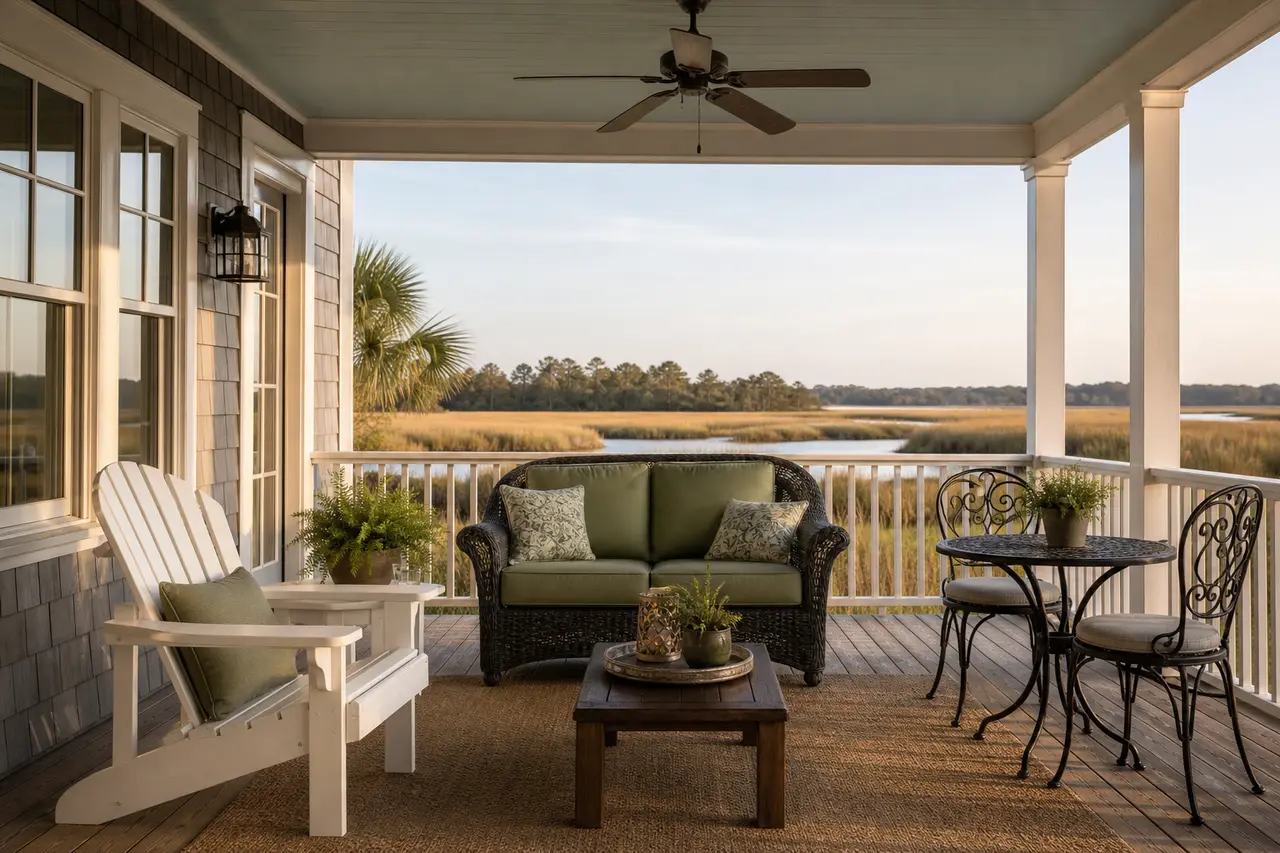
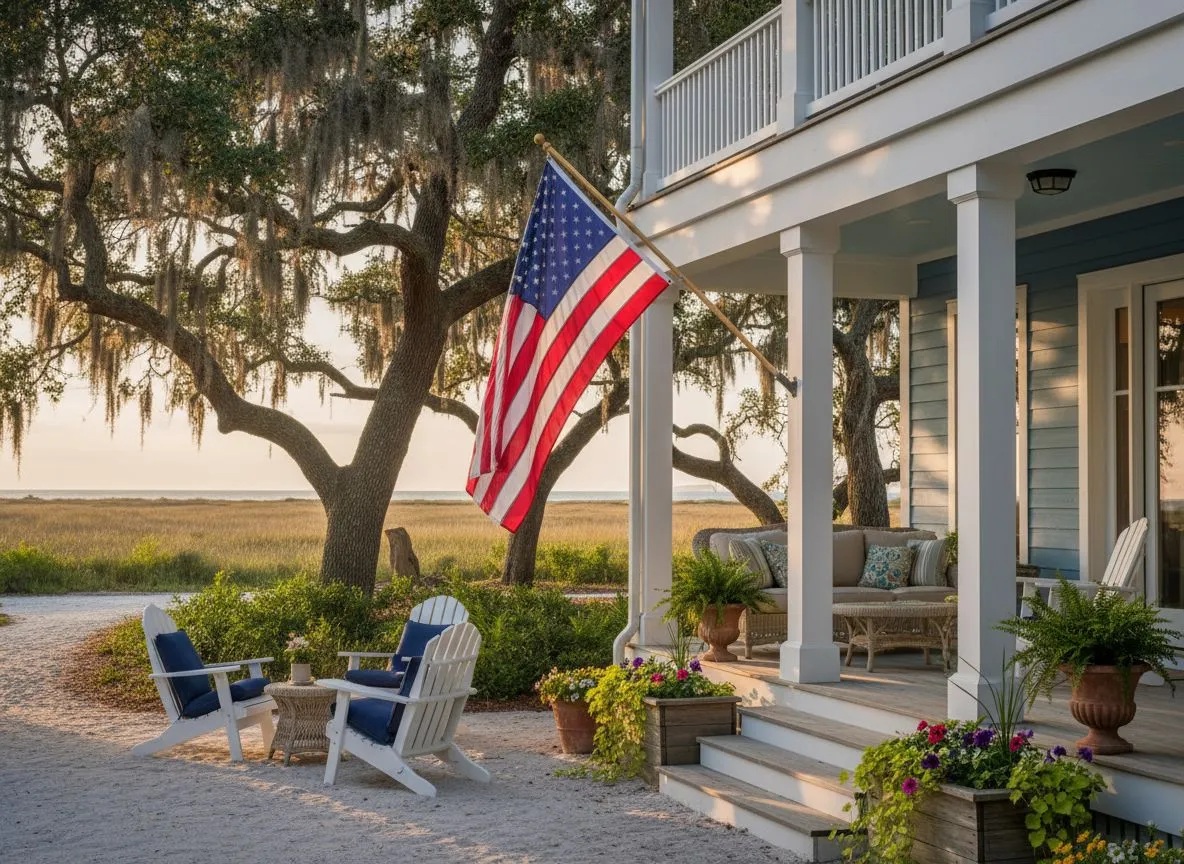
The South Carolina coast is one of the most appealing places in the country to live outdoors. Mild winters mean your porch and patio are usable ten months a year. Live oaks draped in Spanish moss frame almost every view. The marsh light at sunset is the kind of thing that makes people rearrange their entire lives to be closer to it.
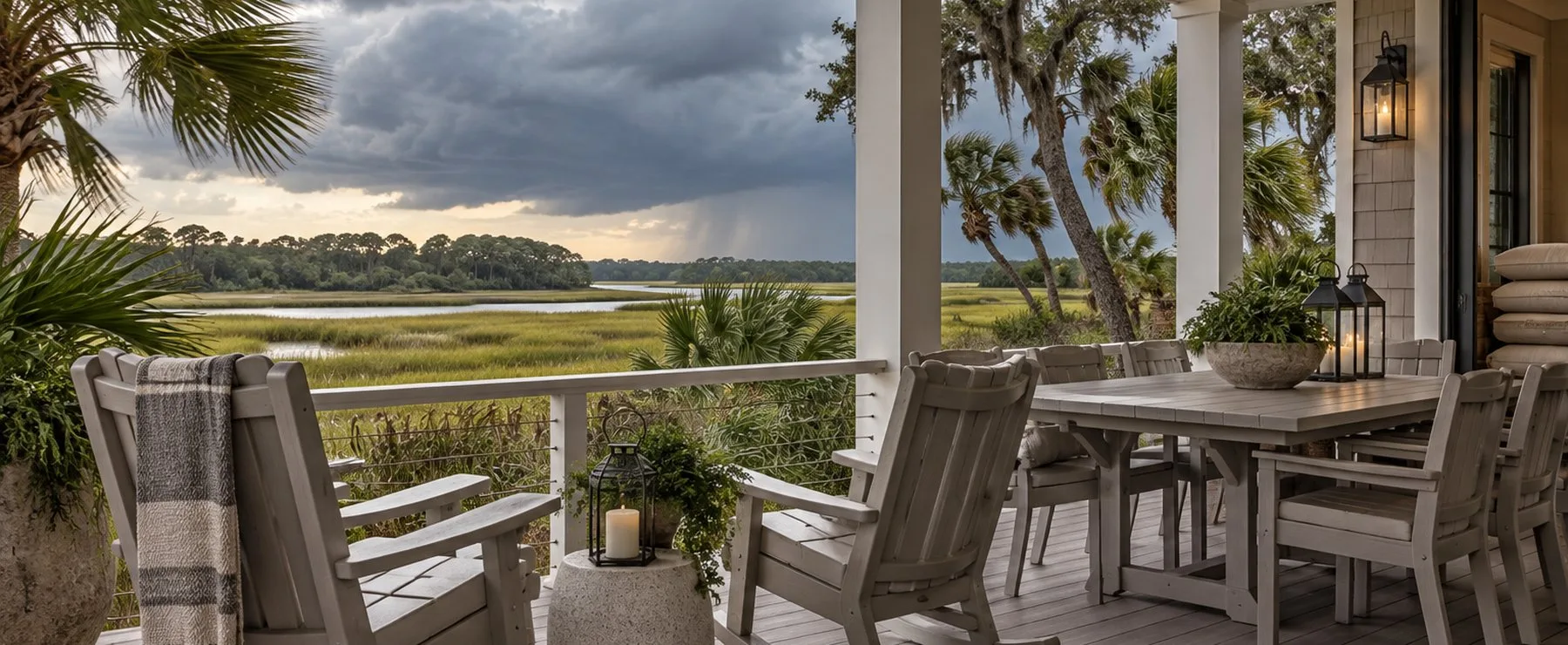
But the same environment that makes outdoor living irresistible also makes it demanding on everything you put outside. Salt air is constant — even homes several miles from the beach experience enough airborne salt to corrode untreated metals and degrade inferior finishes within a single season. UV exposure is intense: Hilton Head Island averages over 2,800 hours of direct sunshine annually, which breaks down paints, stains, and fabrics that aren't engineered for it. Humidity regularly exceeds 80%, creating ideal conditions for mildew, wood rot, and moisture damage in materials that can't breathe or drain.
Add afternoon thunderstorms, the occasional tropical storm, and temperatures that swing from 35°F in January to 95°F in July, and you have an environment that tests every material claim any furniture manufacturer has ever made.
This guide breaks down every major outdoor furniture material — what it is, how it performs in Lowcountry conditions, what maintenance it requires, and how long you can expect it to last. No marketing spin. Just the practical reality of what survives on the South Carolina coast.
02
HDPE Poly Lumber: The Maintenance-Free Champion
HDPE stands for high-density polyethylene — a dense, UV-stabilized plastic lumber made primarily from recycled milk jugs and detergent bottles. It's engineered to mimic the look of painted wood without any of wood's vulnerabilities.
How it performs on the coast: Exceptionally. HDPE is completely impervious to moisture — it won't rot, swell, crack, or splinter regardless of humidity or rain exposure. Salt air has no effect on it. UV stabilizers prevent fading and chalking even under direct Lowcountry sun. It won't support mold or mildew growth because there's no organic material for them to feed on.
Berlin Gardens is the HDPE brand we carry at Terrace + Tide. They're an Amish-crafted manufacturer based in Ohio who builds Adirondack chairs, dining sets, deep seating groups, and bar-height collections entirely from HDPE poly lumber. Their construction uses marine-grade stainless steel hardware — the fasteners are as durable as the lumber they hold together.
Maintenance: This is where HDPE truly shines. There is no maintenance. No painting, no staining, no sealing, no sanding, no oiling. A garden hose and occasional soap clean is all it ever needs. Berlin Gardens backs their HDPE furniture with a 20-year residential warranty — and that warranty isn't aspirational. The material genuinely doesn't degrade in that timeframe.
Weight and feel: HDPE is heavier than it looks, which is both an advantage and a consideration. The weight makes it stable in wind — you won't find your Adirondack chairs in the pool after a thunderstorm. But it also means you don't casually rearrange heavy pieces.
Color options: Berlin Gardens offers an extensive color palette — from classic whites and blacks to coastal blues, greens, and grays. The color goes all the way through the material, not just on the surface, so scratches don't reveal a different color underneath.
Best for: Homeowners who want to invest once and never think about maintenance. Pool decks (HDPE is chlorine-resistant). Waterfront properties with maximum salt exposure. Anyone tired of the annual stain-and-seal cycle that wood furniture demands.
Expected lifespan in the Lowcountry: 20-25+ years.
03
All-Weather Wicker: Classic Aesthetics, Modern Engineering
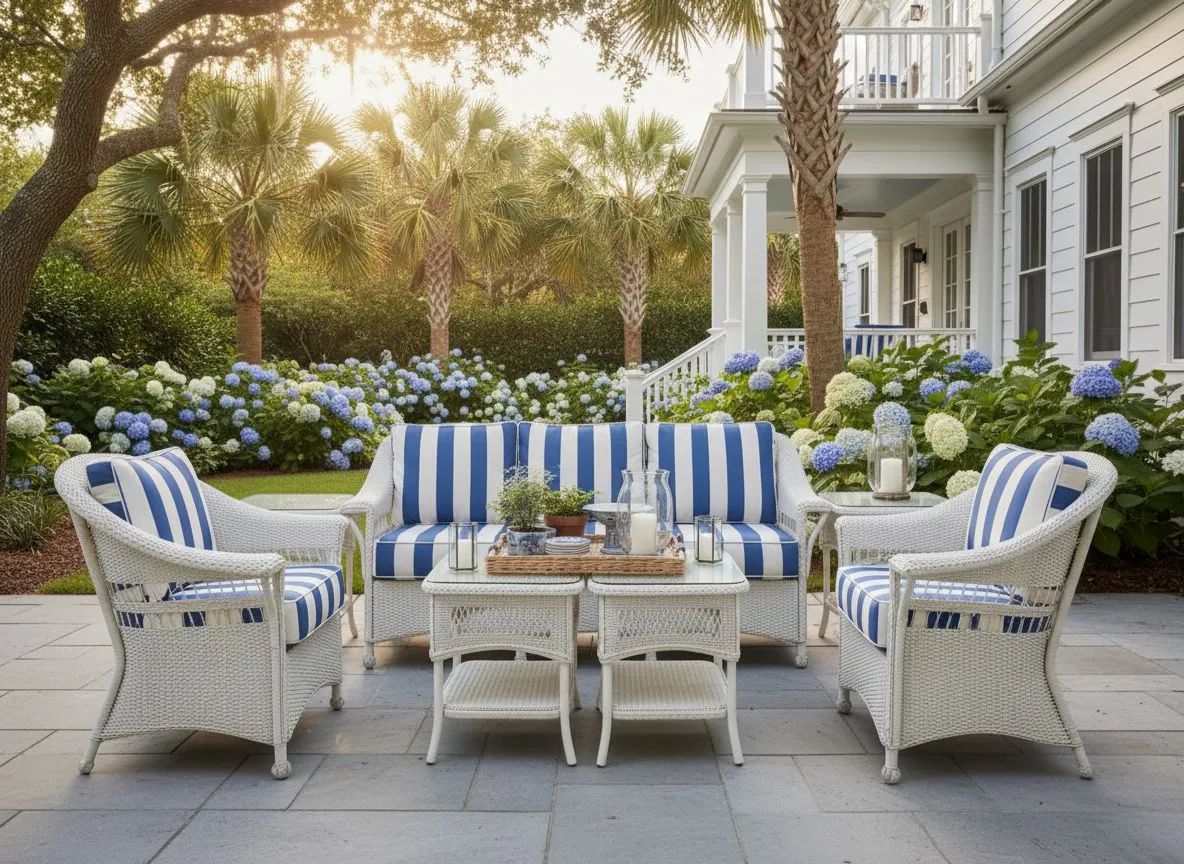
All-weather wicker is synthetic resin fiber woven over aluminum frames. When done well, it captures the timeless appeal of natural wicker — that warm, textured, slightly organic look — while eliminating every problem that makes natural wicker a terrible choice for outdoor use.
Natural rattan wicker was the original porch furniture material in the American South. It's also spectacularly unsuited for outdoor use: it absorbs moisture, breeds mold, becomes brittle in UV exposure, and falls apart in rain. All-weather wicker solves every one of these problems by replacing the natural fiber with engineered resin that's immune to moisture, UV, and biological growth.
Lloyd Flanders has been building wicker furniture since 1906. Their proprietary Lloyd Loom weaving process creates a uniquely tight, consistent weave that's denser and more durable than hand-woven alternatives. The frames are welded aluminum — lightweight, rust-proof, and structurally strong.
How it performs on the coast: Very well. The resin fiber doesn't absorb moisture, so it won't rot or mildew. UV stabilizers prevent fading and brittleness. The aluminum frames are naturally corrosion-resistant. Salt air has minimal effect on the resin or the frame.
Maintenance: Periodic rinsing with a garden hose. For deeper cleaning, mild soap and a soft brush. The weave can trap pollen and dust in the texture, so a more thorough cleaning once or twice a year keeps it looking fresh.
Weight and feel: Lighter than HDPE or wrought iron, which makes it easy to rearrange. The wicker texture adds visual warmth that solid materials can't match — it softens the look of a patio or porch in a way that feels inviting and lived-in.
Style versatility: Lloyd Flanders offers their collections in multiple finishes — from traditional dark charcoal to lighter coastal tones. The wicker weave pairs naturally with Lowcountry architecture: it looks at home on a classic Charleston single house porch, a Hilton Head plantation-style veranda, or a contemporary Bluffton patio.
Best for: Homeowners who value traditional Southern aesthetic with modern durability. Covered porches and screened rooms where the wicker's texture can be appreciated up close. Spaces where lightweight, movable furniture is practical.
Expected lifespan in the Lowcountry: 12-18 years with basic maintenance.
04
Wrought Iron: Heavy, Ornate, and Hurricane-Proof
Wrought iron is the heavyweight of outdoor furniture — literally and figuratively. It's heavy, substantial, ornate, and carries a visual authority that no other material matches. A wrought iron dining set on a Lowcountry porch makes a statement before anyone sits down.
O.W. Lee has been hand-forging wrought iron furniture in California since 1947. Their pieces feature hand-applied decorative scrollwork, intricate patterns, and hand-finished surfaces that give each piece an artisanal quality. This isn't stamped sheet metal formed into furniture shapes — it's forged iron shaped and finished by craftspeople.
How it performs on the coast: Wrought iron is exceptionally strong and heavy — wind, storms, and rough use don't faze it. However, iron is susceptible to rust when its protective finish is compromised. On Hilton Head, salt air can accelerate this process. The key is finish quality: O.W. Lee applies a multi-step powder-coating process that provides excellent corrosion protection. As long as the finish remains intact, the furniture resists rust effectively.
Maintenance: This is where wrought iron demands more attention than HDPE or wicker. Inspect the finish annually for chips, scratches, or bare spots — especially at joints, feet, and areas that contact the ground. Touch up any exposed metal promptly with matching paint or a rust-inhibiting primer. A quick seasonal wipe-down with a protectant spray adds another layer of defense. The maintenance isn't burdensome, but it's not optional in salt air.
Weight and feel: Heavy. A wrought iron dining chair weighs 25-40 pounds. A table can exceed 100 pounds. This is simultaneously the material's greatest strength (stability, solidity, permanence) and its practical limitation (you're not casually rearranging a wrought iron dining set for a party).
Fire pit tables: O.W. Lee's fire pit tables are among the most compelling wrought iron products for the Lowcountry. They combine a functioning gas or propane fire feature with the ornate metalwork that defines the brand. A fire pit table extends your outdoor season into the cooler months — evening entertaining on a Hilton Head porch is comfortable year-round with a fire feature.
Best for: Formal outdoor dining areas. Covered porches where the weight and permanence are assets. Homeowners who appreciate artisanal craftsmanship and are willing to invest in maintenance. Fire pit entertaining setups.
Expected lifespan in the Lowcountry: 15-20+ years with annual finish maintenance.
05
Marine-Grade Aluminum: Lightweight and Corrosion-Proof
Aluminum is the lightest major outdoor furniture material, and marine-grade aluminum (typically 6061 alloy) is specifically formulated for salt-air environments. It's the material used in boat hardware, dock equipment, and coastal infrastructure — places where corrosion resistance isn't a feature but a requirement.
Telescope Casual builds their entire furniture line on marine-grade aluminum frames. The frames are powder-coated with finishes designed for UV and salt exposure, and the construction uses welded joints rather than bolted connections — welds don't loosen over time the way bolts do.
How it performs on the coast: Aluminum naturally forms an oxide layer that prevents further corrosion — it essentially protects itself. Combined with a quality powder coating, marine-grade aluminum is virtually immune to salt air degradation. It doesn't rust, doesn't corrode, and maintains structural integrity indefinitely.
Maintenance: Minimal. Rinse with fresh water periodically to remove salt deposits. Clean with mild soap as needed. The powder coating may require occasional touch-up after many years, but the frame itself doesn't degrade.
Weight and feel: This is aluminum's defining characteristic — it's light. A marine-grade aluminum dining chair weighs 8-15 pounds, roughly a quarter of an equivalent wrought iron chair. This makes aluminum ideal for homeowners who rearrange frequently, entertain large groups (moving extra chairs to the table), or need to bring furniture inside before storms.
Paired with Sunbrella cushions, Telescope Casual's aluminum frames create furniture that's comfortable, practical, and genuinely easy to live with. It doesn't demand attention or maintenance — it just works.
Best for: Pool decks (lightweight, won't rust from chlorine or splash water). Exposed patios where portability matters. Homeowners who host frequently and need to reconfigure seating. Modern or contemporary architectural styles.
Expected lifespan in the Lowcountry: 15-20 years.
06
Materials to Avoid on the Lowcountry Coast
Not every outdoor furniture material is suited for this environment. Some are actively bad choices.
Untreated or softwood lumber: Pine, cedar, and most natural wood furniture requires annual staining or sealing to survive outdoors. In Lowcountry humidity, untreated wood develops mildew within weeks, warps with moisture cycling, and attracts insects. Even pressure-treated wood — which is designed for ground contact — requires ongoing maintenance to look acceptable as furniture. We don't recommend natural wood for Lowcountry outdoor furniture unless you genuinely enjoy the maintenance ritual.
Painted steel (non-stainless): Grills, fire pits, and furniture made from painted carbon steel will rust on Hilton Head. It's not a question of if but when. The first chip in the paint — from a moved chair, a dropped tool, a hailstone — becomes the starting point for corrosion that spreads rapidly in salt air.
Bamboo and natural rattan: Beautiful indoors. Catastrophic outdoors. Natural fibers absorb moisture, breed mold, become brittle in UV exposure, and deteriorate rapidly in any coastal environment.
Resin stacking chairs: The thin, lightweight plastic chairs sold at hardware stores and used by catering companies are not outdoor furniture. They become brittle and crack in UV exposure within 1-2 years and have no structural integrity worth discussing.
Low-density polyethylene (LDPE): Not all plastic lumber is created equal. LDPE is softer, less UV-stable, and less structurally sound than HDPE. If a manufacturer doesn't specifically state HDPE, ask. The difference in longevity is significant.
07
The Cushion and Fabric Layer
Frames last for years. Cushions can fail in months if the materials are wrong.
Outdoor cushion performance depends on two components: the foam core and the fabric cover.
Foam: Standard furniture foam (polyurethane) absorbs water like a sponge. In Lowcountry humidity, it breeds mildew within weeks and takes days to dry after rain. Premium outdoor foam is open-cell and quick-draining — water passes through it rather than being absorbed. After a rainstorm, good outdoor cushions are dry within hours, not days.
Fabric: Sunbrella is the standard. It's solution-dyed acrylic, meaning the color is part of the fiber itself — not a coating that wears off. Sunbrella resists UV fading for years, repels water, prevents mildew growth, and is bleach-cleanable for stubborn stains. Any outdoor furniture dealer on Hilton Head who doesn't offer Sunbrella options isn't taking the environment seriously.
Thread: Even Sunbrella fabric is only as durable as the thread that holds it together. Premium outdoor cushions use GORE Tenara thread — a UV-stable, waterproof thread that won't degrade or discolor over time. Standard polyester thread can rot and fail while the fabric around it still looks new.
Storage: Even the best outdoor cushions benefit from covered storage when not in use for extended periods. A cushion storage box or bringing cushions inside during winter months extends their life significantly.
08
How to Compare Materials Side by Side
Here's a straightforward comparison for Lowcountry conditions:
HDPE poly lumber from Berlin Gardens offers the lowest maintenance, highest weather resistance, and longest warranty of any material. It's the practical choice when longevity and zero maintenance are the priority.
All-weather wicker from Lloyd Flanders offers the best balance of traditional aesthetic and modern durability. It's the emotional choice when the look and feel of classic porch furniture matters as much as performance.
Wrought iron from O.W. Lee offers the most visual impact and structural permanence. It's the design choice when you want furniture that makes a statement and you're willing to invest in annual maintenance.
Marine-grade aluminum from Telescope Casual offers the best portability and flexibility. It's the practical choice when you need lightweight, movable furniture that still performs in salt air.
Most well-designed outdoor spaces use a combination. A Berlin Gardens dining set for daily meals. Lloyd Flanders deep seating for the conversation area. An O.W. Lee fire pit table for evening entertaining. Each material serves its purpose in a different zone of your outdoor room.
09
See Every Material in Person
Material specifications and online descriptions only tell you so much. The real decision happens when you sit in an HDPE Adirondack and feel its contour, when you run your hand across Lloyd Flanders wicker and appreciate the weave density, when you lift a Telescope Casual chair and realize how light marine-grade aluminum actually is, when you lean back in an O.W. Lee rocker and feel the solidity of hand-forged iron.
At Terrace + Tide, all four materials are on display — assembled, cushioned, and ready to be tested. Our showroom is at 71 Lighthouse Road on Hilton Head Island. Come sit in everything. Compare materials directly. And make a decision you'll be happy with for the next decade.
10
Frequently Asked Questions
What is the most durable outdoor furniture material for the South Carolina coast? HDPE poly lumber is the most durable material available. It's completely impervious to moisture, salt air, UV exposure, and biological growth. Berlin Gardens backs their HDPE furniture with a 20-year residential warranty — the longest in the industry.
How often should I clean outdoor furniture on Hilton Head? Monthly freshwater rinsing removes salt buildup and is the most important maintenance step for any material. A deeper clean with mild soap quarterly keeps all materials looking their best. Sunbrella cushion covers can be removed and machine washed.
Can outdoor furniture stay outside year-round on Hilton Head? HDPE, marine-grade aluminum, and all-weather wicker can stay outside year-round with no issues. Wrought iron can as well, but annual finish inspection is important. Cushions last longer if stored during extended periods of non-use. All lightweight furniture should be secured or brought in before tropical storms.
Is teak a good choice for Lowcountry outdoor furniture? Teak is naturally rot-resistant and can survive outdoors, but it requires significant maintenance on the coast. Without regular oiling, teak weathers to a silver-gray patina that many homeowners find unattractive. Salt buildup accelerates the weathering process. For Lowcountry conditions, engineered materials like HDPE and marine-grade aluminum deliver better long-term results with far less effort.
How do I choose between HDPE and wicker? It depends on your aesthetic preference and maintenance tolerance. HDPE requires zero maintenance and lasts longest, but has a more modern, solid-material look. Wicker offers a warmer, more traditional aesthetic that feels distinctly Southern, with slightly more maintenance and a shorter (though still impressive) lifespan. Many homeowners use both — HDPE for dining and wicker for lounging.
What makes Sunbrella fabric better than other outdoor fabrics? Sunbrella is solution-dyed — the color is embedded in the fiber during manufacturing, not applied to the surface. This means it resists fading far longer than surface-dyed fabrics. It's also water-repellent, mildew-resistant, and can be cleaned with diluted bleach without damage. Most manufacturer warranties on outdoor cushions require Sunbrella or equivalent solution-dyed fabric.
Products Featured in This Article
Keep Reading
You May Also Like
Ready to Create Your Outdoor Space?
Visit our showroom for personalized guidance on furniture, grills, and everything you need to live beautifully outside.
Schedule a Consultation