
Recipes · 8 min read
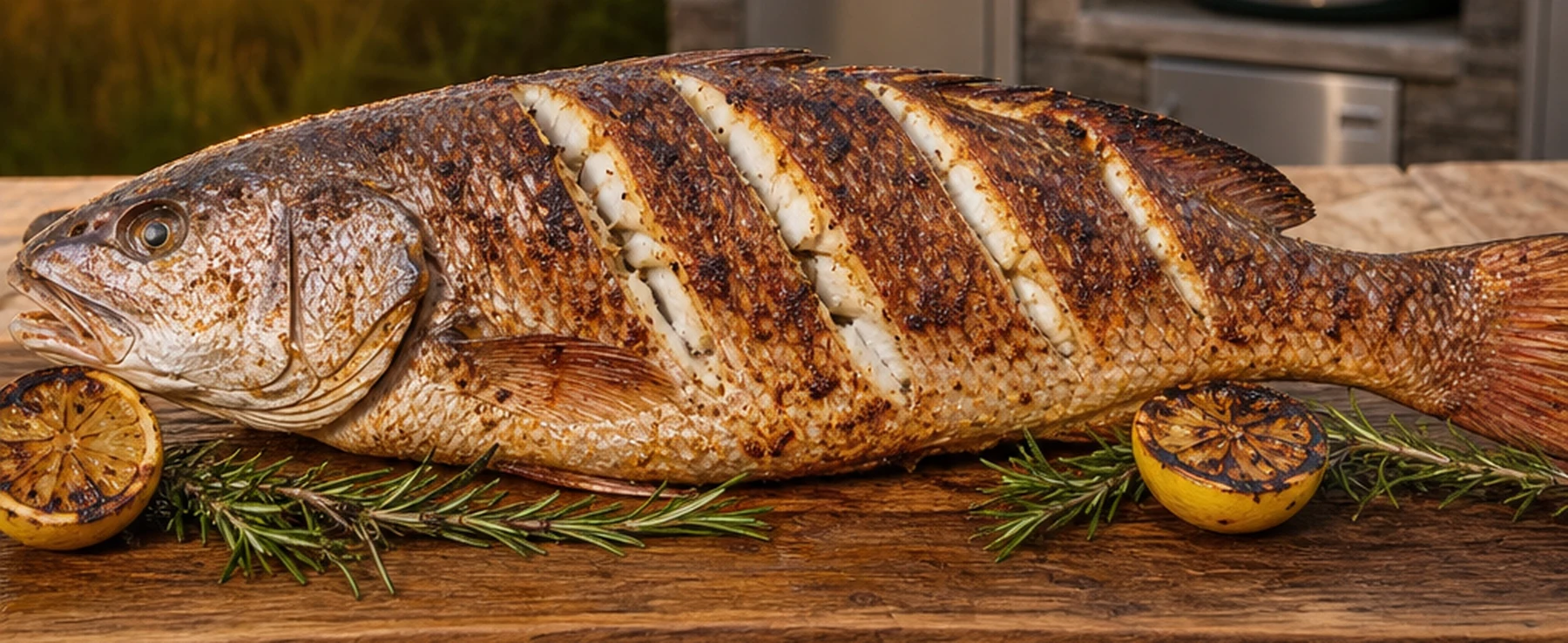
September Catch: Whole Grilled Red Drum and Shrimp Butter Over Live Fire
September is the best seafood month on the South Carolina and Georgia coast — shrimp are at their fall size and redfish are on the flats. Here is how we cook both over live fire, in one meal, on a porch on Hilton Head.
01
Why September Is the Month
Ask anyone who fishes out of Hilton Head, Bluffton, or the Savannah River side of the line what their favorite month is, and September comes up more than any other. The water is still warm, the summer crowds have thinned, and two things happen at once: the shrimp have put on real size after a summer of growing, and redfish are moving over the flats and the grass edges in numbers.
It is also the month the porch becomes usable again. Evenings drop out of the nineties, the light goes long and gold around seven, and cooking outside stops being a chore. That combination — a genuinely good catch and a genuinely pleasant evening — is why this is our favorite meal of the year to cook in the showroom's demo kitchen.
This recipe puts both on the table at once: a whole redfish cooked over indirect heat, and a skillet of shrimp swimming in the pan butter you spoon over everything.
02
What Is Actually Swimming Out There in September
A quick, honest orientation for anyone shopping the docks rather than running a boat.
- Wild local shrimp. September is the heart of it. Fall shrimp are noticeably bigger than the early-summer ones, and the flavor difference between a shrimp landed that morning and a frozen import is not subtle. Head-on is worth asking for.
- Red drum (spottail bass). The signature inshore fish of the Lowcountry, and the one this recipe is built around. Recreational size and creel rules exist for good reason and change from time to time — check current SCDNR or Georgia DNR regulations before you keep one, or simply buy a fillet-grade whole fish from a market.
- Flounder. The fall run gets going as water temperatures start to slide. Delicate, lean, and excellent on a plank rather than a bare grate.
- Triggerfish, black sea bass, and king mackerel. The offshore side of a September weekend. Trigger in particular is dense, sweet, and holds up to live fire better than almost anything.
- Blue crab. Still going strong through early fall, and a pound of picked meat folded into the shrimp butter at the end turns this from dinner into something people talk about.
If you cannot get red drum, this same method works on a whole snapper, a whole black sea bass, or a thick triggerfish fillet. Adjust time, not technique.
03
Buying the Fish
Ask for a whole red drum in the 3 to 4 pound range, scaled and gutted, head on. That size feeds four and sits comfortably in the middle of a large kamado or on the indirect side of a gas grill.
Look for clear eyes, red gills, and flesh that springs back. A whole fish tells you more about its freshness than a fillet ever will, which is one of several reasons to cook it this way. The bones and skin also do real work: they hold the fish together over the fire, they keep the meat moist, and the collar — the piece just behind the head — is the best bite on the whole fish.
Have the market score the fish for you if you would rather not, three or four diagonal cuts per side, down to the bone.
04
The Recipe
SERVES 4
Ingredients — the fish
- 1 whole red drum, 3–4 lb, scaled and gutted, scored 3–4 times per side
- 2 tablespoons olive oil
- 1½ teaspoons kosher salt, plus more for the cavity
- ½ teaspoon coarsely ground black pepper
- 1 lemon, sliced into thin rounds
- 1 small bunch flat-leaf parsley
- 4 sprigs fresh thyme
- 3 cloves garlic, smashed
- 1 chunk of pecan or oak wood, for smoke
Ingredients — the shrimp butter
- 1½ lb wild local shrimp, peeled and deveined, shells reserved
- 6 tablespoons cold unsalted butter, cubed
- 3 cloves garlic, thinly sliced
- 1 small shallot, minced
- ½ cup dry white wine
- 2 tablespoons fresh lemon juice
- ½ teaspoon smoked paprika
- Pinch of cayenne
- 2 tablespoons sliced scallions
- 2 tablespoons chopped parsley
- Kosher salt and black pepper
Method
- 1Bring the grill to a steady 375°F set up for indirect heat, and add the wood chunk once the fire is clean and the smoke has gone thin and blue.
- 2Pat the fish completely dry inside and out — this is the single biggest factor in skin that releases cleanly. Rub it with olive oil and season the outside and the cavity with salt and pepper.
- 3Stuff the cavity with the lemon rounds, parsley, thyme, and smashed garlic. Do not overpack it; air needs to move through.
- 4Lay the fish on the indirect side, close the lid, and cook 30–40 minutes, until the thickest part behind the head reads 135°F and the flesh at the score marks flakes away from the bone.
- 5While the fish cooks, toast the reserved shrimp shells in a dry cast iron skillet over medium heat for 3 minutes, then discard them. That thirty seconds of work is what makes the pan butter taste like the coast.
- 6Add 2 tablespoons of the butter to the same skillet with the shallot and garlic and cook 45 seconds, until fragrant but not browned.
- 7Add the shrimp in a single layer, season with the paprika, cayenne, salt, and pepper, and cook 90 seconds per side, until just opaque. Pull the skillet off the direct heat.
- 8Deglaze with the wine, scraping the pan, and reduce by half. Off the heat, swirl in the remaining cold butter one cube at a time along with the lemon juice until the sauce is glossy and slightly thickened.
- 9Move the fish to a warm board and let it rest 5 minutes. Fold the scallions and parsley into the shrimp butter.
- 10Serve family style: open the top fillet along the spine, spoon shrimp and pan butter over it, and let people work their way down to the collar. Lift the backbone out in one piece before serving the bottom fillet.
05
Tips for Success
- Dry fish, oiled fish, hot grate. In that order. Wet skin sticks, and a fish that sticks tears when you move it.
- Cook to temperature, not to the clock. A 3-pound fish and a 4-pound fish are twenty minutes apart. 135°F behind the head is the number that matters.
- Go easy on the smoke. One chunk of pecan or oak is plenty. Redfish is delicate and heavy smoke buries it.
- Do not flip the fish. Indirect heat cooks it through from both sides. Flipping a whole fish is how you end up serving it out of the pan instead of off the board.
- Salt the shrimp late. Salting early draws out moisture and costs you the snap you paid for.
- Keep the butter cold. Cold cubes swirled in off the heat emulsify; melted butter poured in breaks into oil.
06
Serving Suggestions
- Stone-ground grits or a simple rice pilaf — anything that will catch the shrimp butter
- Grilled okra or blistered green beans on the direct side while the fish rests
- Sliced late-season tomatoes with flaky salt and good olive oil, which is really all September tomatoes need
- A cold Albariño, Vinho Verde, or an unoaked Chardonnay — bright, high-acid, no oak to fight the fish
- A loaf of crusty bread, non-negotiable, for the butter left in the skillet
07
What This Meal Needs From an Outdoor Kitchen
Cooking a whole fish is the moment people discover the limits of their setup. It is a two-surface meal — indirect heat for the fish, a hot skillet for the shrimp — and it wants counter space on both sides of the grill, because a whole fish needs a board to land on immediately.
That is the case for a built-in island rather than a cart. Every Challenger outdoor kitchen we build gets that landing space designed in, along with a side burner or a dedicated searing zone for exactly this kind of pan work, and storage for the boards, tongs, and fish spatula that live outside anyway. Our own demo kitchen on New Orleans Road is set up this way, and it is where we cook this meal every fall.
If you are cooking on a kamado, a large is the right size for a 3 to 4 pound fish. If you are on gas, use the outer burners and leave the center off.
08
Come Taste the Season
We keep Big Green Egg, Napoleon, Weber, and Delta Heat on the floor, along with Smithey and Made In cookware and the Challenger islands to put them in. September is when the demo kitchen gets used the most, so it is a good month to stop in and ask questions with something actually cooking.
Terrace + Tide is at 13 New Orleans Road on Hilton Head Island, Tuesday through Friday 10 to 5 and Saturday 10 to 4, and Monday by appointment. Call us at (843) 715-0927.
Ready to Create Your Outdoor Space?
Visit our showroom for personalized guidance on furniture, grills, and everything you need to live beautifully outside.
Schedule a Consultation