
Design · 9 min read
What to Look for in a Patio Furniture Store on Hilton Head Island
Not every patio furniture store is built the same. Learn what separates a serious outdoor furniture showroom from a seasonal pop-up — and why choosing the right store on Hilton Head Island matters as much as choosing the right furniture.
01
The Store Matters as Much as the Furniture
Here's something nobody tells you when you start shopping for patio furniture on Hilton Head Island: the store you buy from will determine your experience almost as much as the brand you choose.
A big-box retailer can sell you a patio set. It'll be in a box on a shelf, wrapped in plastic, with a picture on the outside and a spec sheet taped to the back. You'll carry it home, spend an afternoon assembling it, and hope it looks like the photo. If it breaks or fades in 18 months — which it will, in our salt air — you'll start the process over.
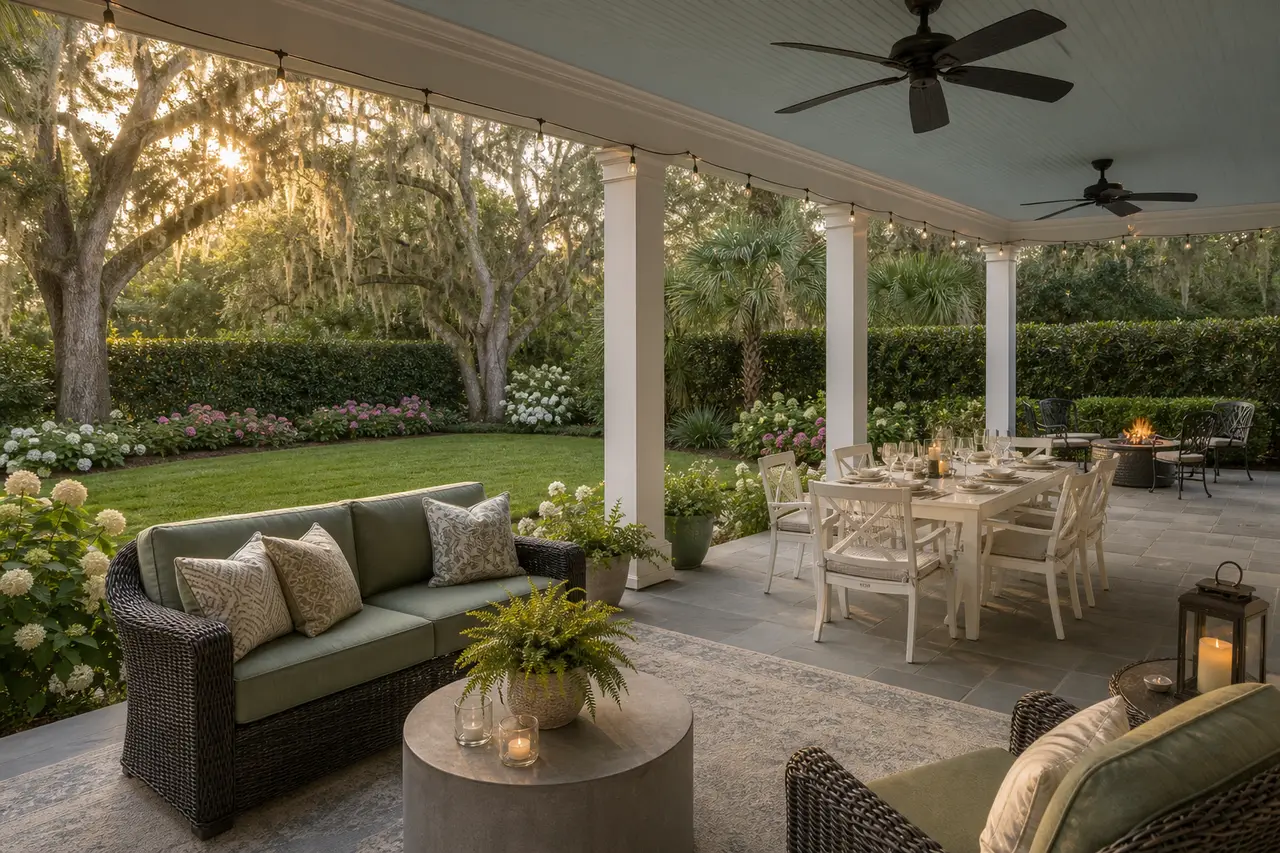
A dedicated patio furniture store operates differently. The pieces are assembled and displayed in room-like settings. You sit in them. You feel the cushion density, the frame weight, the finish quality. Someone who knows outdoor furniture walks you through material options, maintenance requirements, and which brands actually survive on the South Carolina coast. And when something needs warranty service three years later, they handle it.
That difference — between buying furniture and being guided through a furniture decision — is what this article is about.
02
Six Things That Separate a Serious Store from a Seasonal Display
Not every store that sells patio furniture is a patio furniture store. Here's what to look for when you're evaluating your options on Hilton Head.
Assembled, displayed pieces you can sit in. This is the most basic test, and it eliminates most big-box and online options immediately. If you can't sit in a chair before buying it, you're guessing about comfort. A real showroom has dining sets, deep seating groups, chaise lounges, and conversation sets arranged in realistic settings — not stacked on warehouse shelving.
Multiple material types on display. Outdoor furniture comes in fundamentally different materials — HDPE poly lumber, all-weather wicker, wrought iron, cast aluminum, marine-grade aluminum, teak. Each has different weight, feel, maintenance requirements, and lifespan. A good store lets you compare them side by side.
Staff who know outdoor materials. Can the salesperson explain the difference between HDPE and painted wood? Do they know why marine-grade cushion foam matters on Hilton Head? Can they tell you which finishes hold up in salt air and which don't? Product knowledge separates a furniture specialist from a retail employee who happens to be standing near the patio section.
Brands chosen for coastal durability. Hilton Head's combination of salt air, UV exposure, humidity, and occasional hurricanes is one of the most demanding environments for outdoor furniture in the country. A store that curates its brand selection for this specific climate is fundamentally different from one that stocks whatever's popular nationally.
Warranty support and service. Outdoor furniture occasionally needs adjustment, replacement parts, or warranty claims. A store that handles this for you — rather than pointing you to an 800 number — is worth the premium.
Design guidance. The best patio furniture stores don't just sell pieces — they help you plan a cohesive outdoor space. What dining set fits a 12-by-16 porch? What seating arrangement works for a firepit area? What colors and materials complement your home's architecture? This kind of guidance turns furniture shopping into space planning.
03
Understanding the Materials: What Lasts on Hilton Head
Every material has trade-offs. Understanding them before you shop will help you ask the right questions.
HDPE poly lumber is recycled high-density polyethylene — essentially engineered plastic lumber. It's the lowest-maintenance material available for outdoor furniture. It won't rot, crack, peel, splinter, or fade in UV exposure. It's impervious to salt air. It never needs painting, staining, or sealing. Berlin Gardens builds their entire Adirondack and dining collections from HDPE, and the furniture carries a 20-year residential warranty. The trade-off is weight — HDPE pieces are heavier than aluminum — and aesthetic preference. Some buyers prefer the look of natural materials.
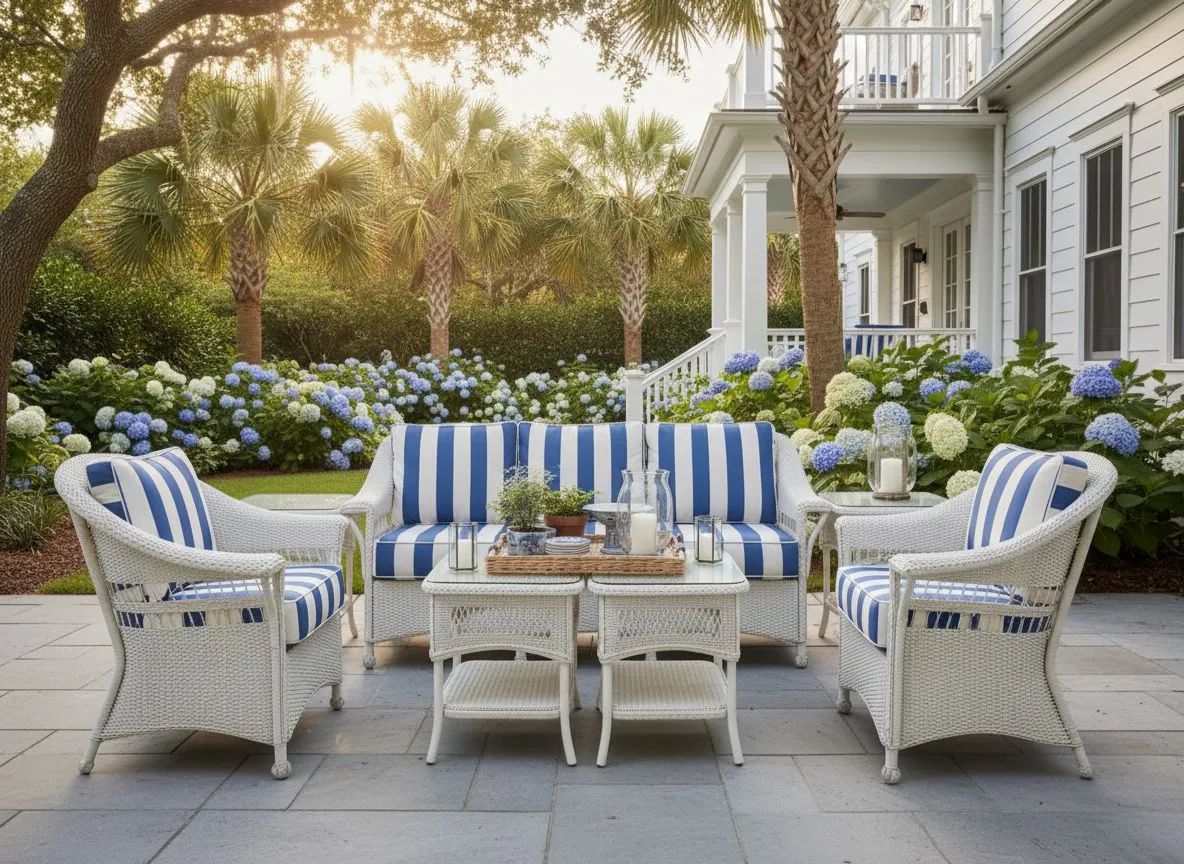
All-weather wicker is synthetic resin woven over aluminum frames. Done well, it mimics the classic look of natural wicker without the rot, mildew, and deterioration issues. Lloyd Flanders has been weaving all-weather wicker since 1906 — their proprietary Lloyd Loom process creates a tight, durable weave that holds up beautifully in coastal conditions. The frames are rust-proof aluminum, and the resin resists UV fading and moisture damage. This is the material for anyone who wants a traditional, warm aesthetic with modern durability.
Wrought iron is heavy, ornate, and distinctly Southern. O.W. Lee hand-forges their wrought iron frames in California, adding decorative scrollwork, intricate patterns, and hand-applied finishes. The result is furniture that looks like it belongs on a grand Lowcountry porch. Wrought iron requires occasional maintenance — a fresh coat of touch-up paint on any chips or scratches prevents rust — but its weight and solidity make it practically hurricane-proof. O.W. Lee's fire pit tables are particularly popular: they combine wrought iron craftsmanship with functional gas fire features.
Marine-grade aluminum is lightweight, rust-proof, and strong. Telescope Casual builds their frames from marine-grade aluminum with powder-coated finishes designed for salt air environments. The result is furniture that's easy to move (important when you're rearranging for a party or bringing pieces in before a storm) and resistant to corrosion. Paired with Sunbrella cushions, aluminum furniture is a practical choice for anyone who values flexibility.
04
The Cushion Question: Why Fabric and Foam Matter
Frames get most of the attention, but cushions determine daily comfort — and they're where most cheap furniture fails first.
Outdoor cushion foam should be open-cell, quick-drying, and mildew-resistant. Standard furniture foam absorbs water and breeds mold in Hilton Head's humidity within a single season. Premium outdoor foam drains through and dries within hours.
Sunbrella is the industry standard for outdoor fabric. It's solution-dyed acrylic — the color goes all the way through the fiber, not just on the surface, so it resists fading even under direct Lowcountry sun. Sunbrella fabrics are also water-resistant, mildew-resistant, and bleach-cleanable. When a sales associate tells you the cushions are "outdoor fabric," ask if it's Sunbrella. If it's not, ask what the UV fade warranty is. The answer will tell you a lot.
Higher-end brands offer dozens of Sunbrella fabric options, letting you customize colors and patterns to match your space. This is another advantage of buying from a specialty store — you can see fabric swatches in person, hold them against your home's exterior paint, and make confident color decisions.
05
How to Evaluate a Showroom Visit
Walk into any patio furniture store with these five tests:
The sit test. Spend at least five minutes sitting in any piece you're considering. Shift positions. Lean back. Reach for an imaginary drink. Comfort isn't something you can evaluate in 30 seconds. A good store encourages you to take your time.
The lift test. Pick up a dining chair. If it feels flimsy or light, the frame construction probably won't hold up long-term. Quality outdoor furniture has a solid, reassuring weight that reflects real materials — not hollow tubing.
The rock test. Push on the arms of a chair or the frame of a table. Does it wobble? Does it flex? Well-built furniture shouldn't.
The finish test. Look closely at joints, welds, and finish quality. Are the welds clean and ground smooth, or rough and visible? Is the powder coating even, or are there drips and bare spots? These details reveal manufacturing quality more honestly than any spec sheet.
The question test. Ask the associate: "What material would you recommend for a home half a mile from the beach?" If they give you a knowledgeable, specific answer about salt air resistance and maintenance requirements, you're in the right store.
06
Why Location-Specific Expertise Matters
Patio furniture that performs beautifully in Arizona may fail within two years on Hilton Head. The Lowcountry coast presents a specific combination of environmental challenges that national brands and general retailers don't always account for:
Salt air accelerates corrosion on untreated metals and degrades lower-quality finishes. UV exposure is intense — Hilton Head averages over 2,800 hours of sunshine annually. Humidity promotes mildew growth on natural materials and poorly ventilated cushions. And every few years, a tropical storm or hurricane brings wind and rain that tests structural integrity.
A store that's been selling outdoor furniture on Hilton Head for years has firsthand knowledge of what actually lasts. They've seen which brands and materials come back for warranty claims and which don't. They know which finishes hold up in salt air and which ones chalk and peel. That accumulated knowledge is worth more than any product comparison chart you'll find online.
07
Planning Your Space: What a Good Store Helps You Think Through
Buying patio furniture is really buying an outdoor room. The best stores approach it that way.
Before choosing specific pieces, a furniture specialist will help you think through the fundamentals: How large is your outdoor space? What's the primary use — dining, lounging, entertaining, or a combination? How many people do you typically host? Is the space covered or exposed? What's the architectural style of your home?
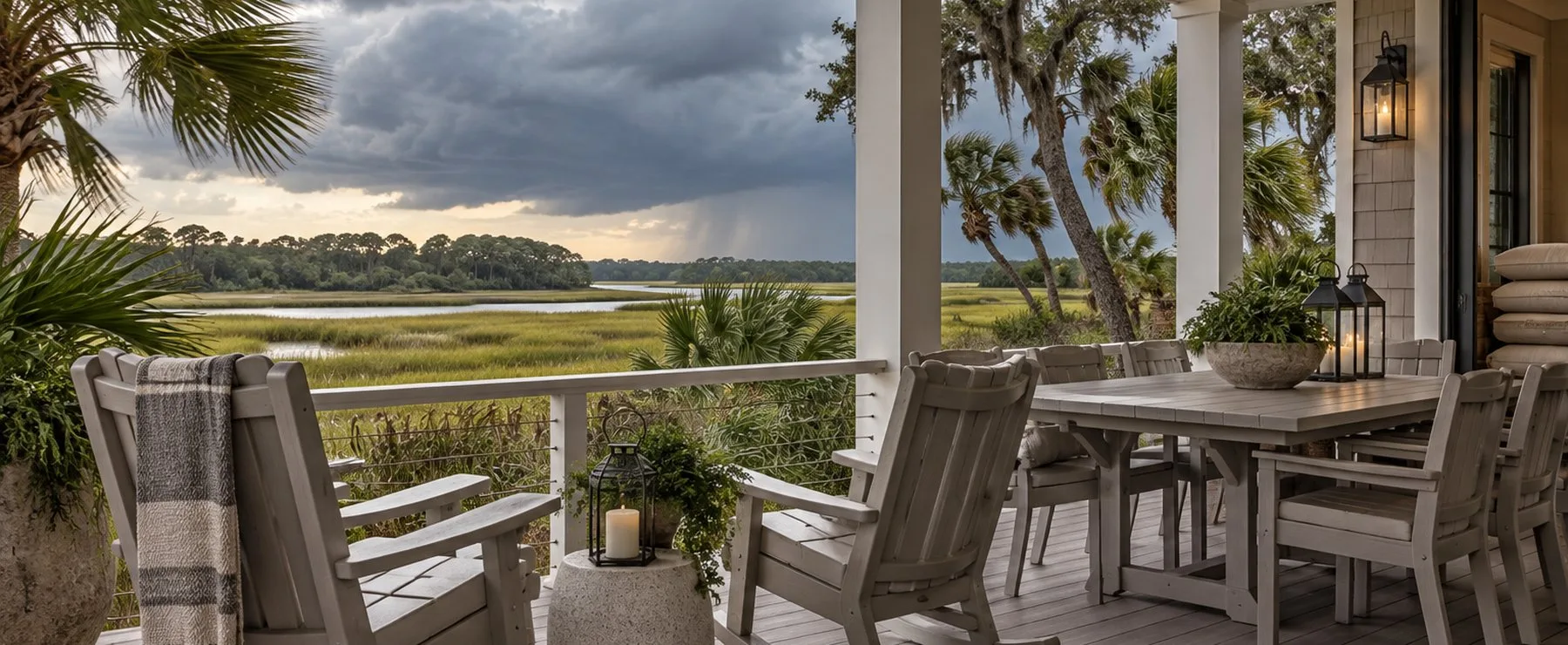
These questions lead to better decisions than walking in and saying "I want a dining set." A dining set for a covered porch overlooking the marsh is a different product recommendation than a dining set for an uncovered pool deck.
Some stores offer space planning services — either on-site measurements or guidance based on dimensions you provide. This is especially valuable for larger projects: outfitting a screened porch, designing a pool deck layout, or creating multiple seating areas on a large covered patio.
08
See It, Sit in It, Live with It
The fundamental advantage of shopping at a dedicated patio furniture store — rather than buying online or from a general retailer — is the ability to make decisions with your senses, not just your screen.
You can feel the difference between a $400 dining chair and a $900 dining chair the moment you sit in them. You can see the difference in finish quality when you examine joints and welds up close. You can judge comfort in the first five minutes and know whether you'll still be happy with that choice five years from now.
At Terrace + Tide, we carry Berlin Gardens, Lloyd Flanders, Telescope Casual, and O.W. Lee — four brands that represent four distinct approaches to outdoor furniture, all proven in Lowcountry conditions. Every piece is assembled and displayed. Every cushion is available to sit on. And our team knows these products inside and out because we live with the same salt air and sunshine you do.
Stop by our showroom at 71 Lighthouse Road on Hilton Head Island. Sit in everything. Ask every question. And when you find the piece that feels right, we'll make sure it's built to last in the place where you live.
09
Frequently Asked Questions
What outdoor furniture materials last longest on Hilton Head Island? HDPE poly lumber and marine-grade aluminum with powder coating are the most durable options for Hilton Head's salt air environment. Both resist corrosion, UV fading, and moisture damage without requiring annual maintenance. Berlin Gardens HDPE carries a 20-year residential warranty.
How often should I clean outdoor furniture on the coast? Rinse frames and cushions with fresh water monthly to remove salt buildup. A quarterly deep clean with mild soap and water keeps finishes looking new. Sunbrella cushion covers can be machine washed on a gentle cycle.
Is it worth paying more for premium outdoor furniture brands? On Hilton Head, absolutely. Premium brands use materials specifically engineered for coastal conditions — marine-grade aluminum, UV-stable HDPE, solution-dyed fabrics. Budget furniture typically lasts 1-3 seasons in salt air. Premium pieces last 10-20 years with basic maintenance.
Can outdoor furniture stay outside during a hurricane? Lightweight furniture should be brought inside or secured before any tropical storm. Heavier wrought iron and HDPE pieces are more wind-resistant but should still be moved to a covered area when possible. Most warranty claims we see are storm-related — and the damage is usually preventable with preparation.
What's the difference between buying online and buying from a showroom? Online, you're relying on photos and dimensions. In a showroom, you can sit in the furniture, feel the frame quality, compare materials side by side, and get guidance from someone who knows which products survive on the coast. Returns are also simpler — you don't ship a 75-pound dining table back in a box.
Products Featured in This Article
Keep Reading
You May Also Like
Ready to Create Your Outdoor Space?
Visit our showroom for personalized guidance on furniture, grills, and everything you need to live beautifully outside.
Schedule a Consultation