
Grilling · 8 min read
Smithey Ironware on Hilton Head: Why Lowcountry Cooks Choose Charleston-Made Cast Iron
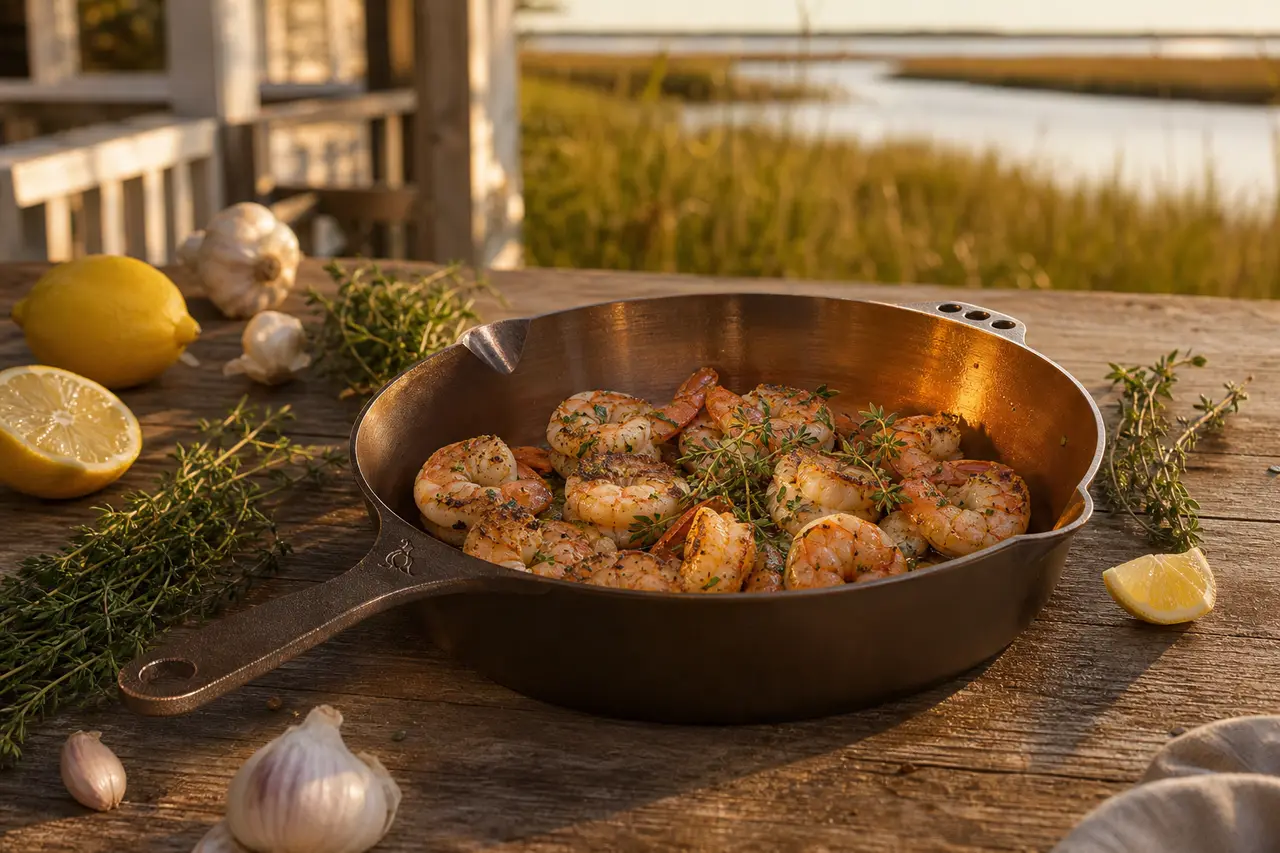
Smithey Ironware is hand-poured and polished 90 miles from Hilton Head in Charleston, SC. Learn what sets their cast iron apart, why Lowcountry cooks swear by it, and where to see the full collection in person on Hilton Head Island.
01
Cast Iron with a Charleston Address
There's a workshop on the old Navy Yard in North Charleston where Isaac Morton and his team hand-pour and hand-polish every piece of cast iron that carries the Smithey name. It's not a factory in the conventional sense — it's a foundry with a philosophy. Every skillet, every Dutch oven, every carbon steel pan that leaves the Smithey workshop has been touched by human hands at multiple stages of production.
That workshop sits about 90 miles from our showroom on Hilton Head Island. When you pick up a Smithey skillet at Terrace + Tide, you're holding something that was made down the road — not shipped from overseas, not mass-produced on an automated line. It was poured, ground, polished, and seasoned by people who live in the same Lowcountry climate, eat the same Lowcountry food, and understand what a cooking tool needs to do in this part of the world.
This matters more than most people realize when they're choosing cookware.
02
What Makes Smithey Different from Every Other Cast Iron
If you've ever cooked on a vintage cast iron skillet — a Griswold or a Wagner from the early 1900s — you know what a smooth cooking surface feels like. Modern mass-produced cast iron lost that quality decades ago. Most cast iron you'll find at big-box retailers has a rough, pebbly texture straight from the sand mold. It works, but it's not the same experience.
Smithey brought the smooth surface back. After casting, each piece goes through a multi-step polishing process that creates a cooking surface as smooth as those vintage heirlooms. The difference is immediate: eggs slide. Fish releases cleanly. Seared proteins develop an even, unbroken crust instead of sticking in random spots.
The polished surface also seasons faster and more evenly. Seasoning — that built-up layer of polymerized oil that creates cast iron's natural nonstick properties — bonds better to a smooth surface. After a few months of regular use, a Smithey skillet develops a deep, glossy patina that makes it genuinely easier to cook on than the day you bought it.
Every piece ships pre-seasoned with organic flaxseed oil, so you can cook on it right out of the box. But the real magic happens over time, as your own cooking builds layer after layer of seasoning specific to how you use it.
03
The Lowcountry Connection
Smithey didn't end up in Charleston by accident. Isaac Morton chose the location deliberately — the Lowcountry's culinary tradition demands tools that can perform across a wide range of techniques. Shrimp and grits in a skillet. She-crab soup in a Dutch oven. Cornbread baked over live coals. Pan-seared red drum with a crispy skin.
These are dishes that reward heat retention and even distribution — exactly what cast iron does better than any other material. But they also reward a cooking surface that releases food cleanly, which is where Smithey's polish makes the critical difference.
When we stock Smithey at Terrace + Tide, it's not because we went looking for a cast iron brand. It's because Smithey is local, their quality is extraordinary, and their cookware fits the way people actually cook in the Lowcountry. The connection between the product and the place is real.
04
The Collection: What Smithey Makes and What Each Piece Does
Smithey's lineup is intentionally focused. They don't make twenty variations of the same product. Each piece in the collection serves a distinct purpose.
The No. 10 Skillet is the workhorse — 10 inches across, the right size for two thick-cut steaks, a full batch of cornbread, or four servings of shrimp and grits. It's the piece most people start with, and often the piece they reach for most.
The No. 12 Skillet is the entertainer — 12 inches across, deep enough for a one-pan chicken dinner, wide enough for a double batch of smash burgers when friends come over. If you cook for more than two people regularly, this is the one.
The No. 12 Flat Top is a griddle — smooth, flat, and perfect for smash burgers, breakfast spreads, and anything that benefits from maximum surface contact. It nests on the No. 12 skillet for storage.
The Dutch Oven is Smithey's masterpiece. Five and a half quarts, with the same polished interior surface as the skillets. The lid has a self-basting ridge pattern that channels condensation back onto whatever you're braising, creating a constant cycle of moisture that keeps roasts and stews unbelievably tender. Use it on the stovetop, in the oven, or nestled into the coals of a Big Green Egg.
The Carbon Steel Skillet is lighter than cast iron, heats faster, and develops its own seasoning over time. It's the pan professional chefs reach for when they need responsiveness — sauteing, pan sauces, delicate fish. If you already own cast iron and want something that complements it rather than duplicates it, this is the piece.
05
Cooking with Smithey: Four Recipes We've Tested
We don't just sell Smithey — we cook with it. Here are four dishes our team has made in Smithey cookware, all suited for outdoor cooking on Hilton Head.
Reverse-Seared Ribeye: Start the steak low and slow on your grill's indirect zone (225°F until the internal temperature hits 115°F), then finish it in a screaming-hot Smithey No. 10 with butter, thyme, and garlic. The polished surface gives you a crust that's almost impossible to achieve on grill grates alone. We published a full guide to this technique — it's one of the most popular articles on our site.
Lowcountry Shrimp and Grits: Sauté andouille sausage in the No. 12 until the edges crisp, then add shrimp, a splash of white wine, and finish with butter and scallions over stone-ground grits. The skillet's heat retention keeps everything at the perfect temperature from stove to table.
Cast Iron Cornbread: Preheat the No. 10 in a 450°F oven (or inside a Big Green Egg set for baking), add a tablespoon of butter to coat the bottom, then pour in your batter. The hot skillet creates a golden, crunchy bottom crust that no baking pan can match.
Smash Burgers on the Flat Top: Get the No. 12 Flat Top blazing hot on your gas grill, press beef balls flat with a sturdy spatula, and let the Maillard reaction do its work. Two minutes per side, American cheese on top, soft bun. This is the simplest and most satisfying thing you can cook on a Smithey.
06
Why Holding It in Person Changes the Decision
Cast iron is one of those products where the physical experience matters enormously. Weight, balance, handle shape, surface texture — these are things you need to feel, not read about.
A Smithey No. 10 weighs about five pounds. That's lighter than you might expect for cast iron. The handle has a gentle curve and a helper handle on the opposite side for two-handed lifting. The rim is designed for clean pouring. These details sound minor in a product description, but they're immediately obvious when you pick the piece up.
The polished surface is the real revelation. Run your fingers across it and you'll feel the difference from standard cast iron in one second. It's smooth like glass — almost slippery. That's when most people understand why Smithey commands a premium price: the surface quality is a fundamentally different product than what you'll find at a hardware store.
We keep the full Smithey collection on display at Terrace + Tide. You can pick up every piece, compare weights, and feel the craftsmanship for yourself. No one has ever walked into our showroom, held a Smithey, and said "that's the same as the $25 skillet at the department store." The difference is that obvious.
07
Caring for Your Smithey
Cast iron maintenance has a reputation for being complicated. It isn't — but there are a few rules.
After cooking, wash with hot water and a stiff brush. Soap is fine — modern dish soap won't strip seasoning the way old-fashioned lye soap did. Dry immediately and thoroughly. If you want to be meticulous, heat the skillet on the stove for 30 seconds to evaporate any remaining moisture, then wipe with a thin layer of cooking oil.
Never soak cast iron. Never put it in the dishwasher. Never leave it wet. These three rules cover 99% of cast iron care mistakes.
If you see rust — which can happen in the Lowcountry's humidity if you leave a damp pan overnight — scrub with steel wool, re-season with a thin coat of oil in a 450°F oven for an hour, and move on. It's not a crisis. Cast iron is almost indestructible.
Store your Smithey with a thin oil coating in a dry spot. If you stack pans, put a paper towel between them to prevent scratching the seasoning. And cook with it often — the best maintenance for cast iron is regular use.
08
Made Down the Road, Built to Last Forever
Most of what we carry at Terrace + Tide is built for the outdoors — furniture that withstands salt air, grills that perform in coastal humidity, accessories that hold up to the Lowcountry climate. Smithey fits this philosophy perfectly. Cast iron doesn't wear out. It doesn't go obsolete. A Smithey skillet you buy today will be cooking meals for your grandchildren.
The fact that it's made 90 miles away in Charleston — by people who understand this place and its food traditions — makes it something more than just cookware. It's a Lowcountry product, through and through.
Visit our showroom at 71 Lighthouse Road to see the full Smithey collection in person. Pick them up. Feel the difference. And if you want to cook something that night, we'll point you toward the right piece for whatever's on your menu.
09
See the Full Smithey Collection
Stop by Terrace + Tide to see Smithey Ironware alongside our complete selection of outdoor cooking tools — including Big Green Egg, Made In Cookware, and everything you need to cook beautifully outdoors.
Products Featured in This Article
Keep Reading
You May Also Like
Grilling · 12 min read
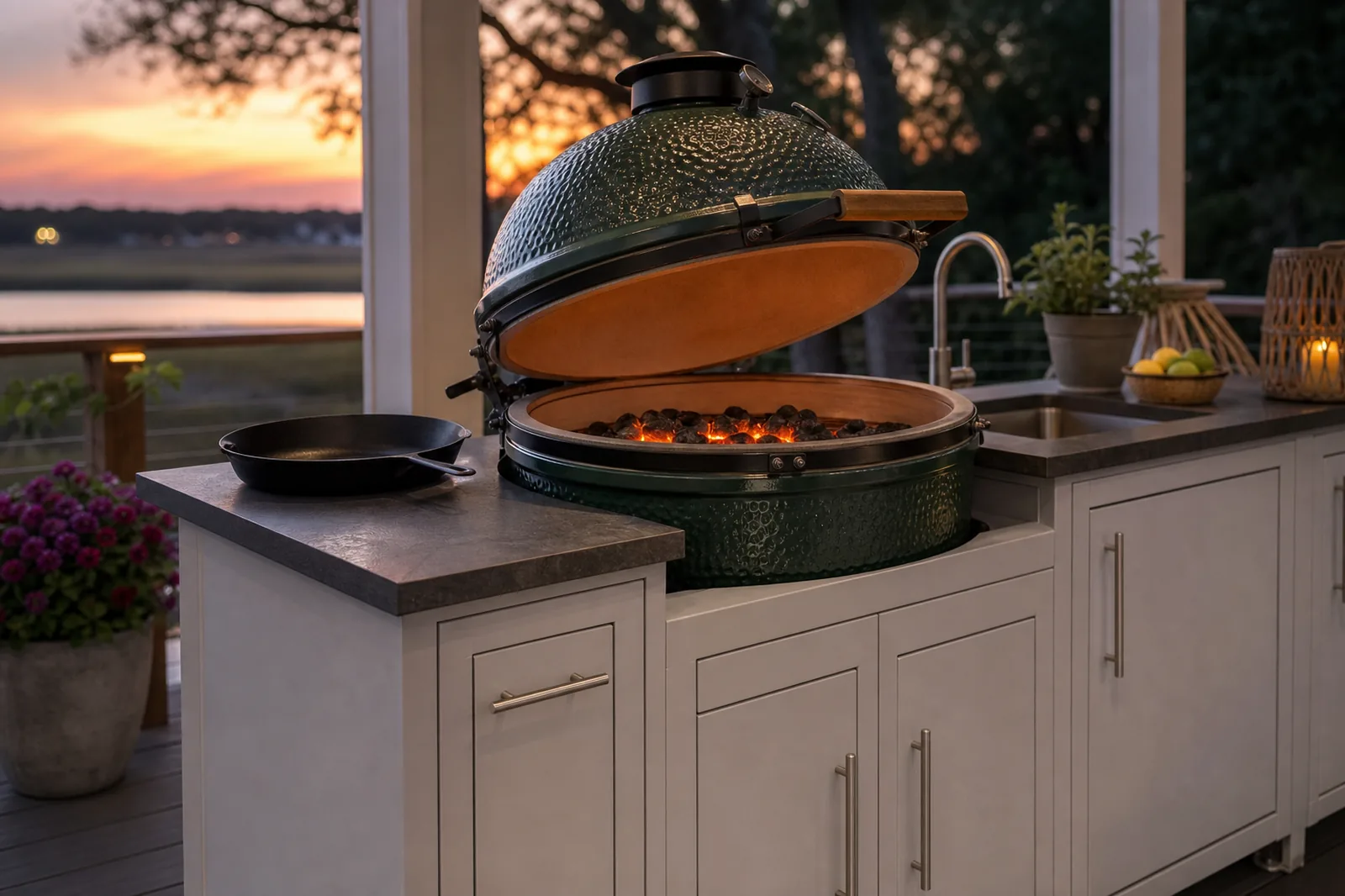
The Big Green Egg on Hilton Head: A Complete Buyer's Guide from an Authorized Dealer
Grilling · 8 min read
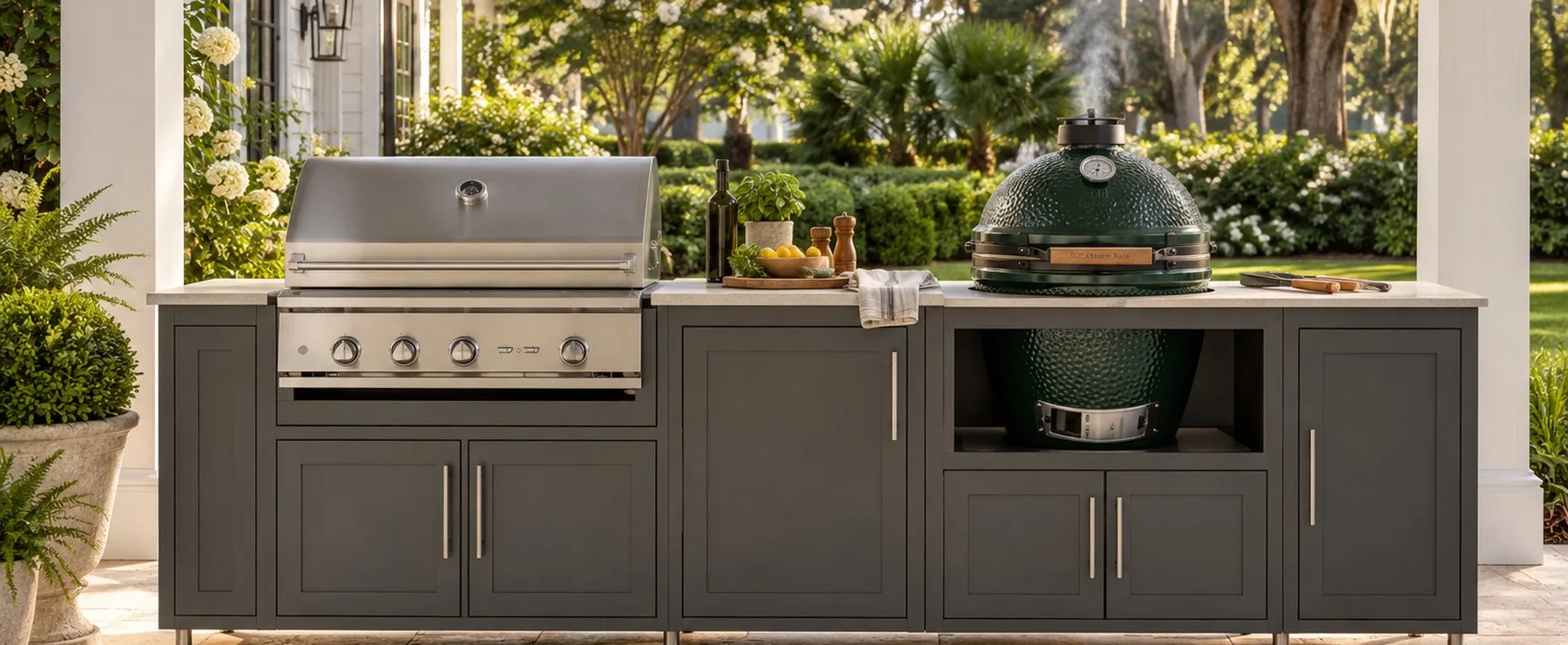
Building a Big Green Egg Outdoor Kitchen: Islands, Cooking Stations and Built-In Kamado Setups
Grilling · 7 min read
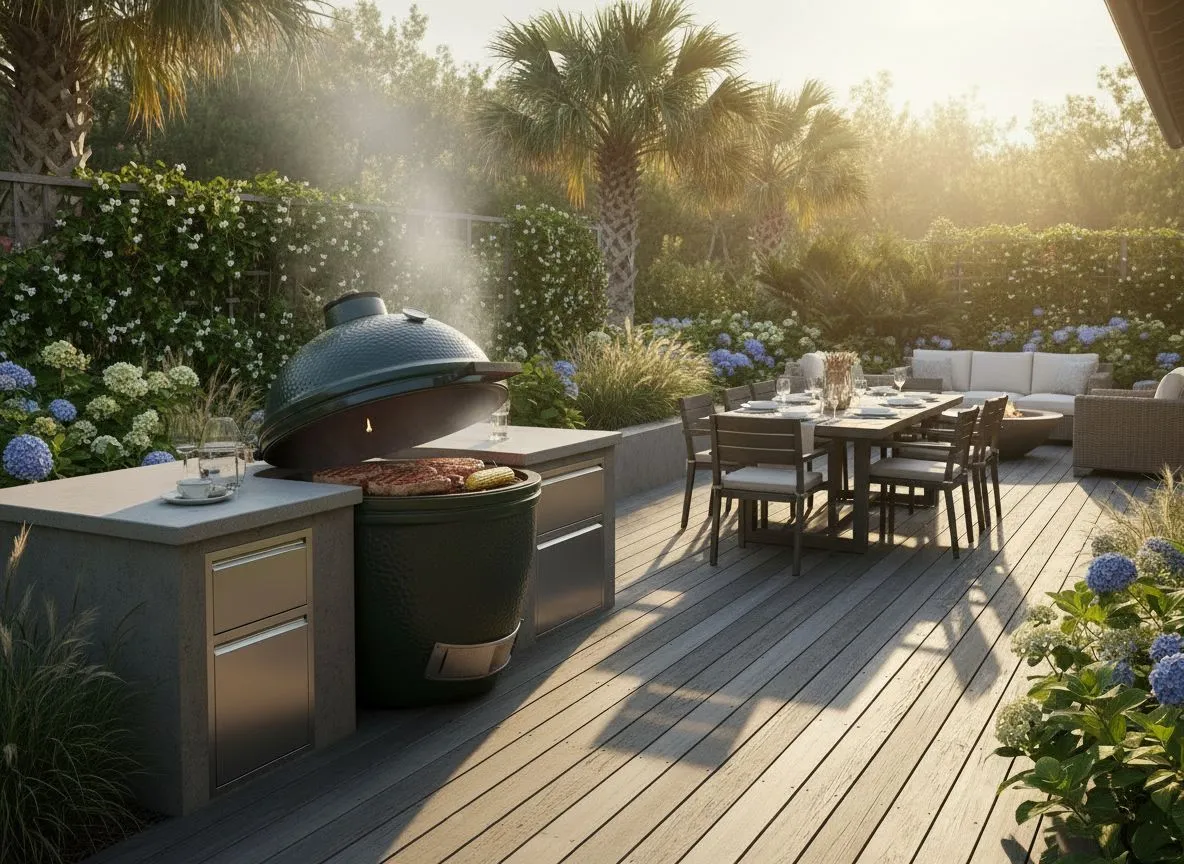
Big Green Egg vs. Traditional Grills: Why Kamado Reigns Supreme
Ready to Create Your Outdoor Space?
Visit our showroom for personalized guidance on furniture, grills, and everything you need to live beautifully outside.
Schedule a Consultation